
Master Of Pottery How SSS Rank Actually Works
Materials, effort, parts, kiln, and matching — then Pottery master at ten SSS works.
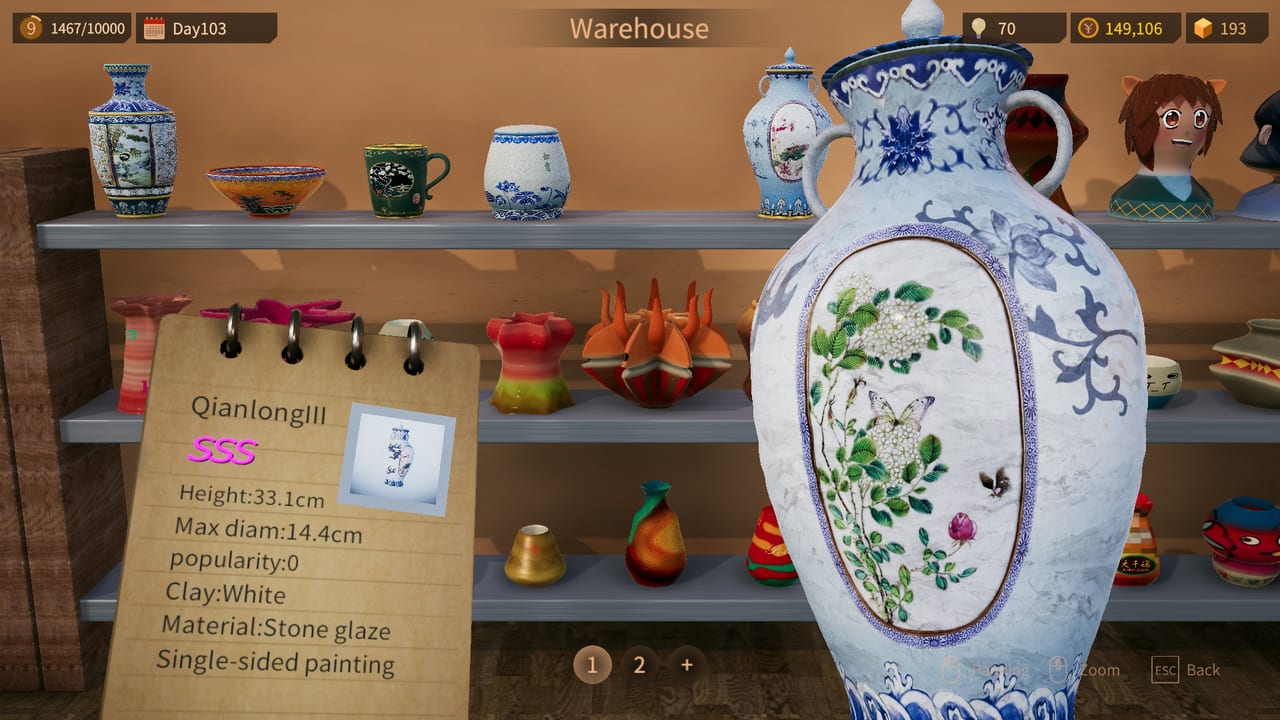
SSS is the top letter in Master Of Pottery. The ladder is C, B, A, S, SS, then SSS. The game cannot judge beauty. It judges a stack: what the clay cost, what the glaze cost, how late the patterns unlocked, how many throwing strokes you took, how many paint strokes you took, how many parts you attached (cap 50), whether the kiln burned clean, and whether style and color agree. Players who chase a pretty silhouette with starter materials stay on A. Players who fiddle, spend, and fire carefully can print SSS on purpose.
Pottery master is the Steam achievement for 10 SSS-level works. It is one of the rarer stamps, sitting with Culture succession and Business elite rather than with First work. This page is the stack, not a claim that every mug must be SSS. You still want C and B pots in the warehouse for apprentices.
Materials: clay, glaze, patterns
Expensive late-game clay is the loudest lever. White clay plus an expensive glaze is a route multiple players still repeat years apart. Starter bodies can luck into S. They struggle to lock SSS. Treat clay like a rank item, not a color swatch. The clay ranking exists so you do not buy a pretty earthenware that the formula treats as early junk.
Glaze is the other material pillar. Open it before paint. Zinc ash is a named player favorite for quality. Late jars beat early rough glaze the same way late clay beats tutorial clay. Patterns follow the same curve: base stamps are weaker than store unlocks, which are weaker than DLC families such as Qianlong or Persian. One family per pot. The Painting Glaze Guide covers zinc ash, stroke volume, custom images, and packs.
Effort: throwing strokes and paint strokes
Time on the wheel counts even if you undo the shape. Fiddle with the profile. Raise, drop, raise again. Smoothness still matters for the object you exhibit, but the score also sees stroke count. The Throwing Clay Guide is the practice page. Do not rush a cone just because inspiration already left the bank. Inspiration is spent at start, not per stroke.
Paint is the same idea with a brush. Many strokes, many colors, paint-overs allowed. A sparse two-tone band on an expensive glaze is leaving effort on the table. Fill the surface, including parts. Then stop when the family still matches. Effort is not the same as visual noise. Matching still has to survive the extra marks.
Parts: up to 50
Every added part is extra points, up to 50. Handles, lids, spouts, and decorative extras all count. A plain bowl can still SSS with elite materials and a long paint session, but parts are free score once the store has sold them to you. Unlock order is in workshop upgrades. Do not wait for 50 lugs on day five. Add what you have. Stack toward the cap on dedicated SSS attempts.
Parts also change how paint and kiln read. A spout you never painted looks unfinished. A lid that hides a burnt lip does not hide the rank hit. Seat parts on a stable wall, then fire.
Kiln and matching
The first fire is a minigame: drying, preheating, high temperature. Left click heat, right click cool. The clay is meant to burn inside-out. Mistakes show after the burn and they tank rank. A premium stack with a ruined core is how people swear SSS is random. It is not random. It is a missed band. The Kiln Firing Guide is mandatory reading before you spend white clay.
The second fire after glaze has no minigame. Matching is the last human term. Tribal with tribal colors. Festive with festive. Do not mix unrelated tribals. The game shows form and match hints early; those hints are the style guide. Orders that ask for a logo need that logo. Tea House work is a brief, not a sandbox.
Ten SSS and the rest of the list
Pottery master wants 10 SSS pieces, not 10 exhibitions of the same pot. Make them, warehouse them, sell some if you want Art merchant (20 sold). Collector wants 30 works in the lifetime count. None of those require every piece to be SSS. Use the achievements tracker so you are not repeating a letter you already banked.
Exhibition heat still likes variety. A hall of ten identical SSS bottles can stall visitors. Rotate. 1.0 tourist comments hint which work may draw a buy letter. Letters pay yen. Yen buys later clay. Later clay prints more SSS. That is the actual endgame loop, not a hidden combat rank.
Public and private rooms from 1.0 pay online tokens. They do not grade your pots. Steam Multi-player does not replace the solo stack. SSS is graded on your own work, not on a shared wheel.
If a piece lands SS, check the cheapest miss: kiln band, glaze tier, pattern family, part count, paint volume. Fix one term per attempt. Ten SSS is a short list of expensive, patient works, not a hundred rushed C grades with lucky letters. When the tenth SSS stamps, go back to the Pottery Guides Hub and spend the next week on booths, not on another identical bottle.
Frequently Asked Questions
Quick answers about throwing, firing, and running your showroom.
What is the letter order?
C is the floor, then B, A, S, SS, and SSS at the top. Pottery master unlocks when you have made 10 SSS-level works.
What matters most for SSS?
Late expensive clay, glaze, and patterns, plus high throwing and paint stroke counts, up to 50 parts, a clean first fire, and style/color matching. Materials plus effort beat a pretty outline.
Can starter clay reach SSS?
Rarely on purpose. Players who consistently print SSS use later clay (white clay is a common example) and an expensive glaze such as zinc ash, then add effort and parts.
Why did an expensive pot drop to C?
Usually the kiln. Inside-out firing mistakes show after the burn and override a strong material stack. Style clashes can also dump a piece toward B or C.
Should every pot be SSS?
No. Keep C, B, and A works for apprentice lessons. SSS attempts are for show pots, buy letters, and the Pottery master count of 10.
Where do I track Pottery master?
In Steam achievements and on the achievements tracker. The work still has to be made on the wheel, not granted by rooms or tokens.